

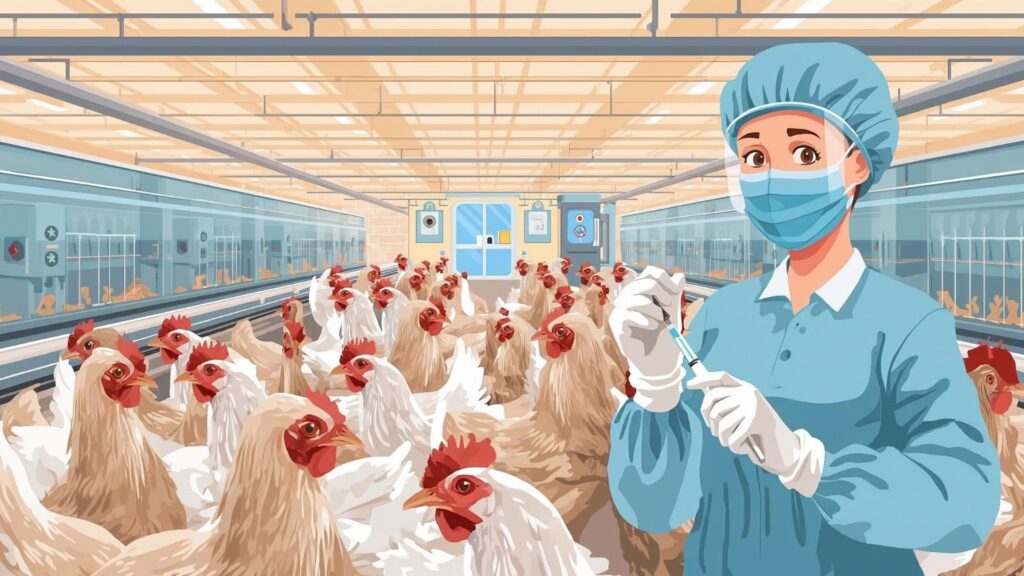
In poultry farming, health management forms the foundation of productivity and sustainability. The two most critical components in this regard are biosecurity measures and vaccination programs.
Biosecurity encompasses all precautions taken to prevent the introduction and spread of diseases within a farm. Measures include controlling farm entrances, limiting visitor and vehicle movements, and requiring staff to wear protective clothing. Additionally, regular disinfection of poultry houses, maintaining clean feed and water, and preventing contact with wild birds and rodents are fundamental pillars of biosecurity.
Vaccination is the most effective method for protecting poultry against deadly diseases by enabling immunity. Vaccines administered at the correct doses and on a regular schedule against common diseases such as Newcastle disease, infectious bronchitis, Marek’s disease, and salmonella help maintain flock health. Vaccination programs should be designed by experts according to age groups and regional risk factors.
In conclusion, when implemented together, biosecurity and vaccination enhance animal welfare and minimize economic losses in poultry farms. These two elements are indispensable for modern and sustainable poultry production.